
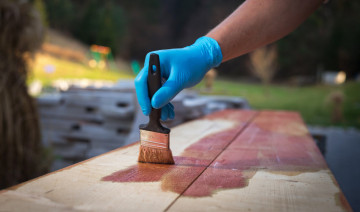
Wood decks, fences, pergolas, siding, and outdoor furniture add warmth and character to any property, but they also face constant exposure to sunlight, rain, humidity, and changing temperatures. Without proper protection, wood can fade, crack, warp, or absorb moisture that leads to premature deterioration.
Choosing the right exterior wood stain or sealer helps preserve both the appearance and durability of your outdoor projects. Understanding the different types of finishes available makes it easier to select the best product for your specific application.
Unlike indoor wood surfaces, exterior wood is exposed to the elements every day. Ultraviolet (UV) rays can fade natural color, while moisture encourages swelling, shrinking, and decay.
A quality stain or sealer helps:
Regular maintenance can significantly extend the life of outdoor wood structures.
Transparent stains offer minimal pigmentation, allowing the natural grain and color of the wood to remain highly visible.
Best suited for:
While transparent stains provide a natural appearance, they generally require more frequent maintenance because they offer less UV protection than more heavily pigmented products.
Semi-transparent stains remain one of the most popular choices for decks and fences.
These products:
They're an excellent balance between beauty and long-term protection.
Semi-solid stains contain more pigment while still allowing some wood grain to show through.
Benefits include:
They're often selected for weathered surfaces that still have good structural integrity.
Solid-color stains resemble paint but penetrate the wood rather than forming a thick surface film.
Solid stains:
They're commonly used on older decks, fences, and siding where appearance has become uneven over time.
Clear sealers provide water resistance while preserving the wood's natural appearance.
They work well when:
Because clear sealers contain little or no pigment, they typically require more frequent reapplication than stains.
Several factors should guide your decision:
Wood Type
Some species naturally absorb finishes differently than others.
Age of the Wood
Older wood may benefit from more heavily pigmented products that help conceal weathering.
Sun Exposure
Structures receiving full sun generally benefit from finishes with greater UV protection.
Desired Appearance
Consider whether you want to showcase the natural wood grain or create a more uniform color.
Even the highest-quality finish won't perform well without proper preparation.
Before staining:
Proper preparation promotes better adhesion and longer-lasting protection.
Over time, exposure to the elements causes finishes to wear down.
Common signs it's time for maintenance include:
Regular inspections help identify maintenance needs before damage occurs.
Whether you're finishing a newly built deck or refreshing an older fence, selecting the right stain or sealer is one of the best ways to protect exterior wood. With proper preparation, the appropriate finish, and routine maintenance, outdoor wood structures can remain attractive, durable, and ready to enjoy for many seasons to come.
